Entries Tagged as 'Street Drugs'
September 29th, 2013 · No Comments
 Molly is the street name for a drug that is pushed as the pure powder form of a banned substance known as MDMA, the main chemical in ecstasy. In the last five years, Molly has made its way into popular culture, helped by references to it made by various entertainers.
If you’re in your twenties and frequent music events such as raves — you have more than likely encountered the drug. While ecstasy was popular in underground nightclub raves in the nineties, molly has become the drug of choice for millennials. Every generation is characterized by one drug or another: the sixties and seventies with pot and hallucinogenics, the eighties with cocaine, and so on.
The Drug Enforcement Administration (DEA) considers MDMA to be a Schedule I controlled substance, which means it has a high potential for abuse, and no accepted use in medical treatment. The DEA notes that MDMA can cause confusion, anxiety, depression, paranoia, sleep problems, and drug craving.
[Read more →]
Tags: Street Drugs
September 11th, 2013 · No Comments
Dr. Sanjay Gupta, CNN Chief Medical Correspondent, recently completed a documentary titled “Weed”, which discusses the value of medical marijuana. He stated that the public has been terribly and systematically misled for nearly 70 years because marijuana was listed as a Schedule 1 substance and one of the most dangerous drugs that has “no accepted medicinal use and a high potential for abuse.” But in reality the Drug Enforcement Agency does not have the science to back it up.
Dr Gupta did express a concern that young people who are still developing their brains are likely more susceptible to harm from marijuana than adult brains. Some recent studies suggest that regular use in teenage years leads to a permanent decrease in IQ. Other research hints at a possible heightened risk of developing psychosis. He urged the youth to wait until their mid 20s after the brains are developed to try it.
[Read more →]
Tags: Marijuana Addiction
Many people experiment with cannabis during their adolescence and early adulthood, and new research shows this is a particularly dangerous age because the brain is still developing. A recent study reported in the Oxford University Press found compelling evidence that brain reacts differently to cannabis exposure that commences during adolescence compared with adulthood.
The aim of the study was to examine the “white matter” pathways within the brain to see if they are changed through long-term heavy cannabis use. It was also hypothesized that the earlier someone started heavy and regular cannabis use the more severe the affect would be on these pathways in the brain.
White matter is the tissue through which messages pass between different areas of gray matter within the brain. Using a computer network as an analogy, the gray matter can be thought of as the actual computers themselves, whereas the white matter represents the network cables connecting the computers together.
There are three different kinds of tracts, or bundles of axons which connect one part of the brain to another and to the spinal cord, within the white matter: projection tracts that extend vertically between higher and lower brain and spinal cord centers; commissural tracts cross from one cerebral hemisphere to the other through bridges called commissures; and association tracts that connect different regions within the same hemisphere of the brain.
To measure the effect of cannabis on the “white matter” pathways, the study looked at long term habitual users of cannabis with a minimum usage of twice a month for the past 3 years (although most recruited in the study had substantially greater use than this) and compared them with healthy non-users. In-depth brain imaging and brain connectivity mapping techniques were performed in each of the 59 cannabis users with longstanding histories of heavy use and the 33 healthy non-users who served as controls.
After examining the habitual heavy cannabis users, researchers found the axonal pathways were impaired in the right fimbria of the hippocampus, splenium of the corpus callosum and commissural fibers. It is also important to note that all of these areas that were impaired have an abundance of cannabinoid receptors.
[Read more →]
Tags: Marijuana Addiction
In a recent report, ninety percent of cannabis users also smoke tobacco, said Arpana Agrawal, an assistant professor of psychiatry at Washington University in St. Louis.
[Read more →]
Tags: Marijuana Addiction · Smoking - Nicotine Addiction
 Highly hallucinogenic, potentially lethal and legal – it’s important you learn about the newest designer drugs sweeping the nation. The street name is “Bath Salts,” but they were never intended for your tub. This powdery substance is packaged as “bath salt” to circumvent drug laws.
The salts contain two synthetic drugs, mephedrone and methylenedioxypyrovalerone, also known as MDPV, which mimic the effects of cocaine or meth.
Poison control centers around the country are being flooded with calls. Emergency rooms are inundated with people who’ve taken this stimulant. Most terrifyingly, this new drug craze is something almost anyone can purchase.
Easily found at gas stations and convenience stores, it is important to learn the many names of this drug to protect your family from its dangerous effects
Sold in packets of white powder with names like Vanilla Sky, Ivory Wave, Bliss, and White Lightning. They are usually snorted or smoked — not unlike cocaine or methamphetamine.
But what exactly do they do?
[Read more →]
Tags: Street Drugs
Recent research published in the European Journal of Immunology, reveals why marijuana users are more susceptible to certain types of cancers and infections by suppressing the body’s immune functions.
The research, led by Dr Prakash Nagarkatti from the University of South Carolina, focused their research on cannabinoids, a group of compounds found inside the cannabis plant, including THC (delta-9 tetahydrocannabinol).
While most immune cells fight against infections and cancers to protect the host, a unique type of immune cell, myeloid-derived suppressor cells (MDSCs) actively suppress the immune system. The presence of these cells is known to increase in cancer patients and it is believed that MDSCs may suppress the immune system against cancer therapy and actually promote cancer growth.
[Read more →]
Tags: Marijuana Addiction
 Parents beware – there are dozens of products today that are being sold as herbal smoking blends, marijuana alternatives or fake pot. Some of the brand names of the synthetic marijuana products include: K2, Blaze, Skunk, and Spice.
Synthetic marijuana is a mixture of dried leaves from traditional herbal plants. There are various colors including green, brown, blonde and red. Typically they are sold in small packets approximately 2 by 3 inches. The packets are foil packs or plastic zip bags.
What Are the Chemicals in Synthetic Marijuana?
Originally, the fake marijuana products contained a chemical called HU-210, which has a molecular structure very similar to THC — the active ingredient in marijuana. Because HU-210 is listed as a Schedule 1 controlled substance in the United States, the fake weed products were manufactured and sold only in Europe.
Recently, two new synthetic cannabinoid agonists have been created that are not similar in structure to THC and therefore not listed as controlled substances. By using CP 47,497 and JWH-018 in the synthetic marijuana mixtures, manufacturers are able to legally market their products in the United States.
There have been no studies conducted on what effects the fake marijuana may have on the body and brain.
[Read more →]
Tags: Marijuana Addiction
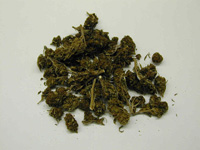 Researchers from Emory’s Rollins School of Public Health and Georgia State University have stated that daily marijuana use in adolescence may hasten symptoms of psychosis. The study was published in the November issue of the American Journal of Psychiatry.
The researchers analyzed data from 109 hospitalized patients who were experiencing their first psychotic episode. The results showed that patients who had a history of using marijuana, or cannabis, and increased to daily pot smoking experienced both psychotic and pre-psychotic symptoms at earlier ages.
“We were surprised that it wasn’t just whether or not they used cannabis in adolescence that predicted the age of onset, rather it was how quickly they progressed to becoming a daily cannabis user that was the stronger predictor,” said Michael Compton, lead author and assistant professor of psychiatry in the Emory School of Medicine.
[Read more →]
Tags: Marijuana Addiction
 A new study, published in Neurobiology of Disease, states that daily consumption of marijuana (cannabis) in teens can cause depression and anxiety, and have an irreversible long-term effect on the brain.
According to Dr. Gabriella Gobbi, a psychiatric researcher from the Research Institute of the McGill University Health Centre, the damaging effects of marijuana on young brains are worse than originally thought.
“We wanted to know what happens in the brains of teenagers when they use marijuana and whether they are more susceptible to its neurological effects than adults,” stated Dr. Gobbi.
Her study points to an apparent action of marijuana on two important compounds in the brain — serotonin and norepinephrine — which are involved in the regulation of neurological functions such as mood control and anxiety.
[Read more →]
Tags: Marijuana Addiction
September 30th, 2009 · No Comments
A team of researchers from Australia and the U.S. led by Dr. Louisa Degenhardt at the University of New South Wales, in Sydney, have made the case for estimating the role that cannabis (aka marijuana) plays as a risk factor for psychosis worldwide.
This could give an idea of the extent of impact cannabis has on our public healthy globally. The information could be very valuable for guiding health policymakers in their decisions regarding services, research and health policies.
[Read more →]
Tags: Marijuana Addiction