Entries Tagged as 'Drug Addiction Alternative Treatment'
 Are you searching for the truth about how to overcome alcohol, tobacco, and drug abuse / addiction?
You will get your answers here.
Drug Addiction Alternatives
Most drug recovery programs are a failure and people keep relapsing! Most people also do not know they have options regarding drug recovery programs. Don’t waste your money. Get my reports and you will see why.
Continue with this post and you will see a chart that shows the difference between conventional drug treatment and alternative drug treatment programs.
[Read more →]
Tags: Drug Addiction Alternative Treatment
Clarity Way is an inpatient drug and alcohol rehab facility that provides intensive, individualized treatment programs tailored to each client. A custom program is developed for each client based on his or her personal needs, challenges, and goals. The approach merges medical and holistic modalities, providing clients a forum to participate in a range of therapeutic techniques to nurture the whole person - body, mind, and spirit.
[Read more →]
Tags: Drug Addiction Alternative Treatment
Most current treatments of PTSD and Substance Use Disorders are outdated and incomplete because they only address the apparent behaviors and symptoms and fail to address the underlying causes.
[Read more →]
Tags: Drug Addiction Alternative Treatment
Dr. CE Gant talks on the video about addiction being the number one cause of death and suffering in the world. Also he talks about current conventional treatment being ineffective and what really must be done to overcome various addictions.
[Read more →]
Tags: Drug Addiction Alternative Treatment
What do you believe? Do you believe this . . . most people believe symptoms are the disease so they often take drugs, herbs or supplements to suppress symptoms in the false belief that a medical or psychiatric problem is resolved if symptoms disappear. These myths may stem from deep, unconscious fears handed down to us from ages past when diarrhea was equated with typhoid fever or a cough could mean that one has tuberculosis. TB did kill about one billion human beings in the 1800s, so one can understand why people are afraid of symptoms and believe they are the disease itself.
Only recently have we come to understand that symptoms suggest something very different. Symptoms are actually the result of the body trying to heal itself in some way. Diarrhea and cough could very rarely signify a lethal problem and should be investigated if they become chronic problems, but actually these symptoms are protective detoxification mechanisms which the body employs to remove toxins from gastrointestinal and respiratory tracts respectively.
Fatigue can signify malnutrition and therefore tiredness could be a natural response of the body to conserve calories. Nausea is a protective signal from the body instructing us to fast, because the GI tract is dealing with something toxic or infectious and does not want to devote its limited resources to digesting food. Joint pain is a clear protective signal to rest an inflamed joint. Depression could result from overdoing our fight/flight sympathetic nervous system and the consequent burnout protectively forces us to rest.
Symptoms are the result of the body trying to heal itself in some way, but those symptoms can be maladaptive. If diarrhea causes severe dehydration, or if a cough prevents sleep, obviously these symptoms, however valid as healing mechanisms, are maladaptive and may need to be suppressed with herbal or drug therapies. But usually, symptoms are perfectly adaptive attempts of the body to heal, and should be understood from that perspective and modified only if they spill over into a maladaptive pattern.
For instance, fever is a protective mechanism designed to injure infectious organisms which do not reproduce as well at higher temperatures. However, brain injury or seizures can occur if fever gets too high, so medication may be needed to keep it under 104 degrees to prevent such adverse maladaptive responses.
Three Kinds of Chronic Symptoms
Chronic symptoms are usually not lethal, but they can be life-limiting. The three main kinds of chronic symptoms are:
1- fatigue,
2- pain (emotional or physical) and
3- dysfunction (occupational, social, academic, interpersonal).
I am often asked, “Doc, how should these be treated?” Or, “What can I take to make these symptoms go away?” This is the wrong question, and the age old dictum – if you ask the wrong questions you get the wrong answers – applies here. Many chronic medical and psychiatric problems never resolve because the wrong questions are asked about how to resolve them.
[Read more →]
Tags: Drug Addiction Alternative Treatment
In the webinar (Link below), Dr. C.E. Gant explains why a significant and often overlooked cause of most common chronic medical and psychiatric problems, including drug addictions is toxicity or total toxic load (TTL). Even if TTL is recognized as an issue at all, few treatment centers offer a comprehensive strategy which individualizes the treatment to the unique genetic and biochemical status of each patient. Many approaches to TTL involve the use of one or a few long term therapies which can take years to complete, can often cost many 10s of thousands of dollars and at the end of treatment patients are often not sure if they have achieved results.
Over 100 million Americans are socially, vocationally, medically and/or psychiatrically disabled, and most don’t know why. Most are told that “illness just happens” and it’s the luck of the draw, or that their “symptoms are all in their head.” Like the metaphor of the frog which fails to jump out of a slowly heating pot of water and eventually boils to death, we have slowly become so desensitized to chronic emotional and physical pain, to feeling sick and tired and to dysfunctional behaviors, that many believe these endemic disabilities are normal.
Much of this disability is due to a TTL from the combined effects of heavy metals, plastics, solvents, pesticides, herbicides, fungicides, preservatives, food additives, petrochemicals, fluorine, chlorine, gastrointestinal-, dental- and sinus-derived toxins, OTC and prescribed medications, abused psychotropic substances (e.g., alcohol, tobacco, illicit drugs), chronic infections (e.g., lyme) and other sources of toxins in the polluted modern age, not to mention electrosmog from cellphones and microwave cookers, all of which can be routinely uncovered by laboratory testing and other methods of determining sensitivities to these potentially noxious agents.
[Read more →]
Tags: Drug Addiction Alternative Treatment
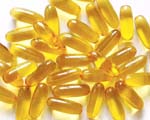 Research published online in the Journal of Clinical Psychiatry (August 2011), found that low levels of docosahexaenoic acid (DHA), the major omega-3 fatty acid concentrated in the brain, may increase suicide risk. A retrospective case-control study of 1600 United States military personnel, including 800 who had committed suicide and 800 healthy counterparts, showed that all participants had low omega-3 levels. However, the suicide risk was 62% greatest in those with the lowest levels of DHA.
According to Joseph R. Hibbeln, MD, acting chief, Section on Nutritional Neurosciences at the National Institute on Alcohol Abuse and Alcoholism, National Institutes of Health, Bethesda, Maryland, “Omega-3 is already recommended by the American Psychiatric Association as adjunctive therapy for anybody with a psychiatric disorder, especially for those with major depression.”
Suicide rates in military personnel have doubled since the start of Operation Enduring Freedom and Operation Iraqi Freedom, and now “rival the battlefield in toll.” Other data and research suggests that nutritional deficiencies in the omega-3 fatty acids may increase vulnerability to combat deployment stress, manifesting as psychiatric symptoms including adjustment disorders, PTSD, substance abuse and alcoholism, major depression, impulsive violence, and suicide. In addition, studies conducted in civilian populations have also suggested that low DHA levels are linked to increased risk for suicide attempts and may contribute to adverse psychiatric symptoms.
Comments by Dr. C.E. Gant, a leading authority on brain disorders such as ADHD, addiction and PTSD follows: I suppose that the immediate response to this horrific data would be to somehow ensure that all military personnel receive 2 or 3 concentrated fish oil capsules a day, which would likely assure adequate delivery of DHA and offset the incidence of depression and suicide in most individuals. Such a widely applied treatment would be consistent with the current paradigm of medical care, e.g. – prevent or treat symptoms or conditions by blindly prescribing an intervention without first attempting to diagnostically determine who is the most vulnerable to certain conditions, based on their nutritional status, heredity or environmental stressors.
Use Functional Lab Testing
Simple, inexpensive, laboratory testing can measure DHA, its precursor fatty acids and also critically important, mood-elevating, omega 6 fatty acids, in order to determine who is nutritionally the most vulnerable to suicide and depression (1). Several B vitamins (B3, B5, B6, biotin), a few minerals (zinc, magnesium), vitamin C and carnitine (a nutrient involved with fatty acid metabolism), are all needed as cofactors to assist 4 enzymes in the synthesis of DHA. These simple functional laboratory tests could determine who would have the greatest difficulty in synthesizing DHA, and thus possesses the most vulnerability to depression and suicide.
[Read more →]
Tags: Drug Addiction Alternative Treatment
Listed below are four different alternative ways to overcome your drug addiction.
1) Heal Yourself With The Proper Instructions
In some cases you should not attempt to detox on your own. For instance, in cases of severe alcoholism, withdrawal can be life-threatening. You could experience the DTs (delirium tremens) and should be under the care of a professional addiction treatment facility.
Also, if you have been taking any benzodiazapenes, such as Valium or Xanax, seizures could occur so they should be under professional care.
If your condition is not too severe, you could try detoxing and then replenishing your brain (and body) with the proper nutrients. I highly recommend Dr. Gant’s book – End Your Addiction Now. It is the best book on the market and you can order it through Amazon. See the “Favorite Books” link on the right side of this page.
For smokers, there are 2 products that can help you kick the nicotine habit. First is the TobacPak supplement which heals the brain neurotransmitters. You can find that product here: Nupathways.com/nicotine-cessation. The second product is brand new – InstaCalms Tobacco Formula spray. Whenever you have a craving, you just spray into your mouth to take the cravings away. You can also get this at Nupathways.com (you may have to ask for it if it is not listed yet). Use the code HJ25 at checkout to get 25% off your total order.
2) See an Integrative Medicine doctor
Have an appointment with an Integrative and Functional Medicine doctor such as Dr Gant that can treat the whole body and not just throw more drugs at you. You can start here with a phone consult: cegant.com/wellness-assessment or see him in person here: NIHADC.com
3) Go to a Holistic Rehab center
I would call most rehab centers “re-toxification” centers. Go to a facility that can treat you in a holistic manner and truly help you get well. Here are 3 of the top drug rehab centers in the country:
* BridgingTheGaps.com,
* HealthRecovery.com and
* AlternativetoMeds.com
[Read more →]
Tags: Drug Addiction Alternative Treatment
Which doctor is incompetent? Conventional or Alternative?
This is important in determining how to overcome your health condition.
Questionable and Deceptive Medical Practices
This rift between large medical organizations which set policies as to what constitutes “accepted standards of care” is prototypic of the raging conflict between conventional and non-conventional or alternative medicine.
The National Center for Complementary and Alternative Medicine (NCCAM), being the “new kid on the block,” apparently treads lightly and seeks to merely “complement” conventional medicine in order to avoid a confrontation with conventional medicine, which sees any challenge to its supremacy as “unproven, unsafe, worthless, incompetent, unprofessional, improper, unlawful, fraudulent and felonious.” Most of NCCAMs projects and grants are aimed at research into indigenous healing practices such as herbal medicine, and very little is focused on functional medicine, the author’s field of expertise.
From the conventional medicine perspective, functional medicine practice is negligent and from the functional medicine perspective, conventional medicine practice is negligent because each group is violating the “accepted standards of care” of the other group. Therefore, each group appears to be fraudulent to the other.
Functional Medicine
Any outstanding doctor needs to be a great detective and should be using functional medicine to determine the real cause of your symptoms.
Functional medicine is defined as “personalized medicine that deals with primary prevention and underlying causes, instead of symptoms, for serious chronic disease,” and functional medicine is popularly classified as a type of Alternative Medicine. Functional medicine relies heavily on investigating biochemical, nutritional, metabolic, toxicological, allergic, immune, hormonal, neurotransmitter and genetic variables using diagnostic laboratory testing of stool, urine, saliva, blood and hair samples.
Thus functional medicine seeks to determine the underlying causes of drug abuse or chronic disease, rather than palliative treatment of symptoms with medications or herbal products (see Diagram below, Conventional Medicine vs Functional Medicine Method of Establishing a Diagnosis).
[Read more →]
Tags: Drug Addiction Alternative Treatment
ModeraXL is specially designed to help rebalance your brain’s depleted neurotransmitters. It makes detox and rehab easier by taking the edge off cravings. The natural solution to drug addiction.
[Read more →]
Tags: Drug Addiction Alternative Treatment